« Learning what I’m missing | Not everyone is bound to the land »

Monday, April 3, 2006, 10:39 pm

Wondering how to be a birder

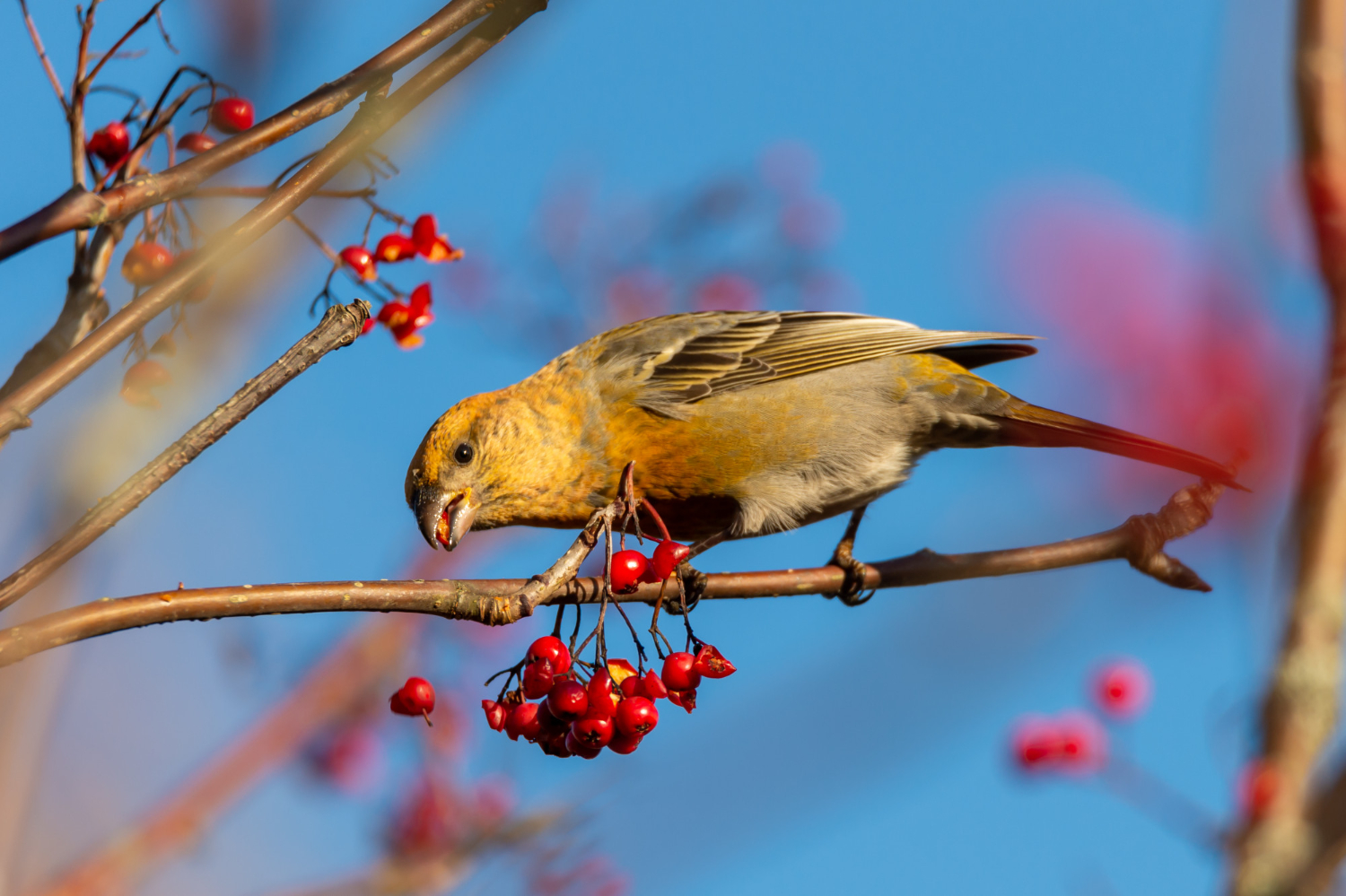
UKARUMPA, PNG — I finally saw a Sacred Kingfisher this morning, perched on a school building, tidy in its blue and buff. A Yellow-breasted Bowerbird put on a show, tugging at twigs in the gum tree and hopping around in the garden shrubs, giving me a very good look.

A woodswallow flew through the rain and mist — the first of its kind I’d seen up here. I strained to see it but got only glimpses. Great Woodswallow is the mountain species, larger and blacker than White-breasted Woodswallow. “Birds of the Aiyura Valley,” though, says that the smaller species does occasionally wander up this way. Whether that information is reliable I cannot say, but this morning’s visitor was a silhouette in the gray and watery sky, ephemeral, a mystery.

Lately my thoughts have been wistful, even dejected, and I’m slowly understanding why.

I knew that I’d be starting over with the birds, that every sound and glimpse would baffle me at first. I was prepared to be overwhelmed, to make mistakes, and to make slow progress sometimes.

But the problem is much greater than simple unfamiliarity with Papua New Guinea’s birds: I don’t even know how to be a birder in Papua New Guinea.

I learned to bird in the United States. Given a new set of birds but a roughly similar environment, I think I would feel much better. Perhaps Australia, for instance, or maybe Britain.

Here, though, everything I took for granted is different. I cannot simply take a map, find the nearest park or county road, and set off to see who lives there. I cannot get to places where people aren’t watching me, or where everybody else is wielding optics anyway.

When I do travel, I’m on assignment, not often free to wander around looking into trees. If I find a few moments of downtime, I know that many pairs of eyes are watching my every move. Would this tall whiteskin look any odder pointing binoculars at a tree than he does standing quietly, holding an umbrella? I don’t know.

Besides, to carry binoculars is to risk losing them. We just barely escaped from eight armed bandits on Saturday.

As I sat this evening, listening to the rain and thinking on these things, a new idea began to form.

Could it be that birding, like everything else in this country, works best in the context of relationship?

Of course, relationship is an important part of birding at home, but it isn’t exactly essential. Cars, parks, maps, roads, books, websites — the information and the means are available to us as individuals. It’s easy, and sometimes much more enjoyable, to be a lone ranger.

I’m a private sort of person. If I’m engaged in enjoying a bird, I don’t like the thought that someone is watching who doesn’t understand. Somehow it feels like a violation, a trespassing where the outsider does not belong.

But here, life is relationship. People are not individuals; they are part of a community.

Does my entire birding paradigm need to be revised?

2 Responses to “Wondering how to be a birder”

  1. on 03 Apr 2006 at 11:14 am 1.Mike said …

    I like the issues you’re exploring in this post. Though you’re tackling a lot of different ideas, one that really strikes me is your identification of the US, Britain, and Australia as places where it’s easier to be a birder.

    I wonder why it is that birding is most successful and accepted in English-speaking, Western-style societies. Conversely, why is it that in a place like PNG, with its abundance of avifauna in natural habitat, birding as a defined interest is considered strange?

  2. on 03 Apr 2006 at 4:52 pm 2.djr said …

    I’m not sure that “birding as a defined interest” is necessarily considered strange here, though undoubtedly some expats think I’m a nerd, just as many do at home. (Are you reading this, Parke?)

    Rather, “birding” as I’ve known it doesn’t really exist here. Sure, bird tours sweep through the country every so often, offering rich Westerners a chance to hit lodges, parks, and well-known sites to see birds. But that sort of activity is doesn’t help somebody like me, who lives here and lacks the several thousand US dollars required for such an expedition.

    Many Papua New Guineans seem knowledgeable about the birds that live around them. Some seem able to identify small, drab, secretive species even though they’ve never touched a pair of binoculars in their lives. They know when species migrate in and out (though not necessarily where they go) and where certain species can be found. Undoubtedly, knowledge and personal interest vary among individuals and communities. I have no way to know whether the average Papua New Guinean knows more about birds than the average Westerner does, but I wouldn’t be surprised if that were true.

    That’s why I say that it may be my understanding of “birding” that needs to change. “Birding” is easier in the West because it has developed in the West, and we’ve learned to do it as Westerners. But how can we expect it to be the same activity in a culture so different from our own?

Trackback This Post | Subscribe to the comments through RSS Feed

Leave a Reply